Robotics
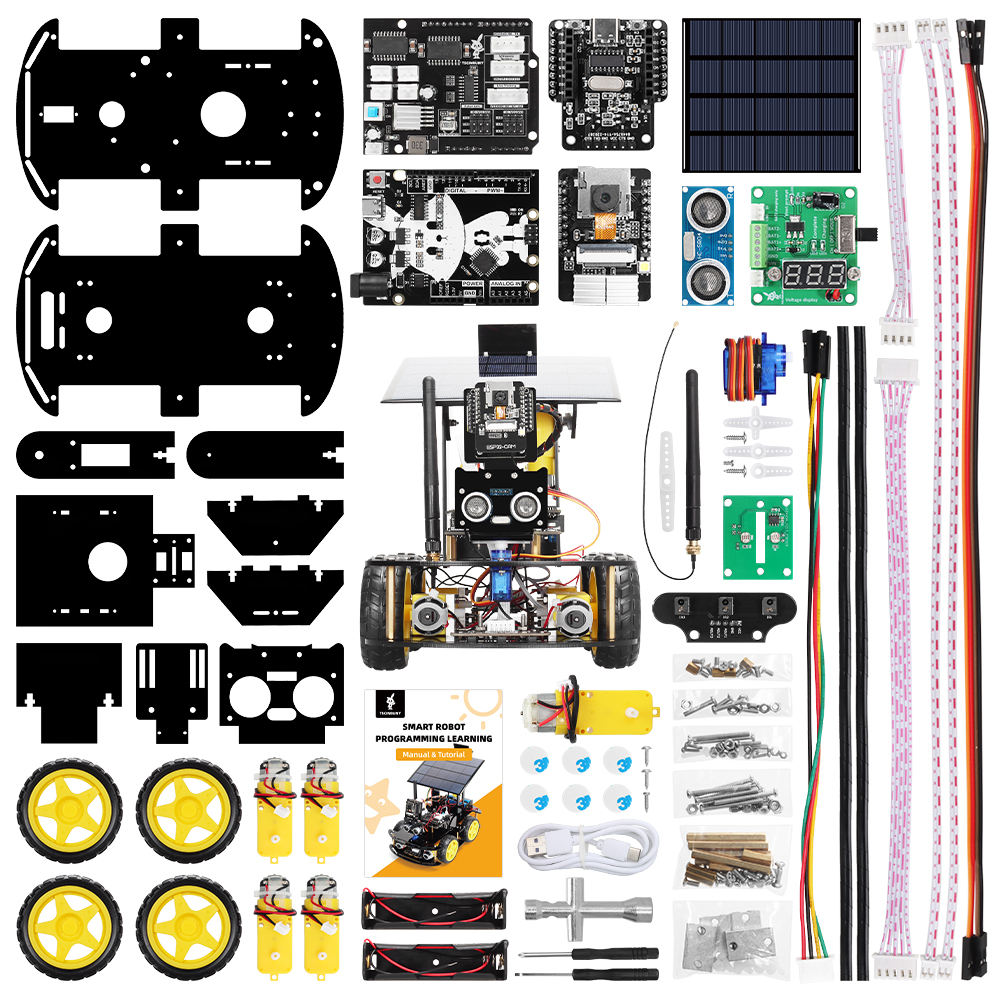
Our Robotics classes bring everything together – mechanical engineering, soldering, circuits, 3D printing and coding – to create real, moving machines, not just screen-based projects. Children start by building simple articulated toys and walking mechanisms, learning how linkages, gears and motors turn code into motion. As their skills grow, they add sensors so their robots can detect light, distance or obstacles and react to what’s happening around them – for example following a line, stopping before a wall or navigating a simple maze. Along the way they practise problem‑solving, teamwork and careful debugging, seeing first-hand how mechanics, electronics and software must all work together to make a successful robot.
Robotics 1
Start assembling your own simple rolling or walking robot, using basic kits and clear step‑by‑step guidance. Children bring together earlier skills in circuits and soldering as they learn how motors, switches and batteries work to make their first robot move.
- Level 1
- 4 Sessions
- Years 4 - 6
- 4 Projects
Robotics 2
Now we introduce microcontrollers and sensors to your robots. Children learn how Arduinos read light, distance or bump sensors and use that data to decide what the robot does next – from stopping before obstacles to reacting to changes in its environment.
- Level 2
- 10 Sessions
- Years 4 - 7
- 5 Projects
Robotics 3
In Robotics 3, children design robots that can look after themselves and tackle set challenges such as maze‑solving, line‑following or obstacle courses, using more advanced sensor setups and coding to make their robots choose what to do.
- Level 3
- 12 Sessions
- Years 5 - 8
- 5 Projects