Web Development
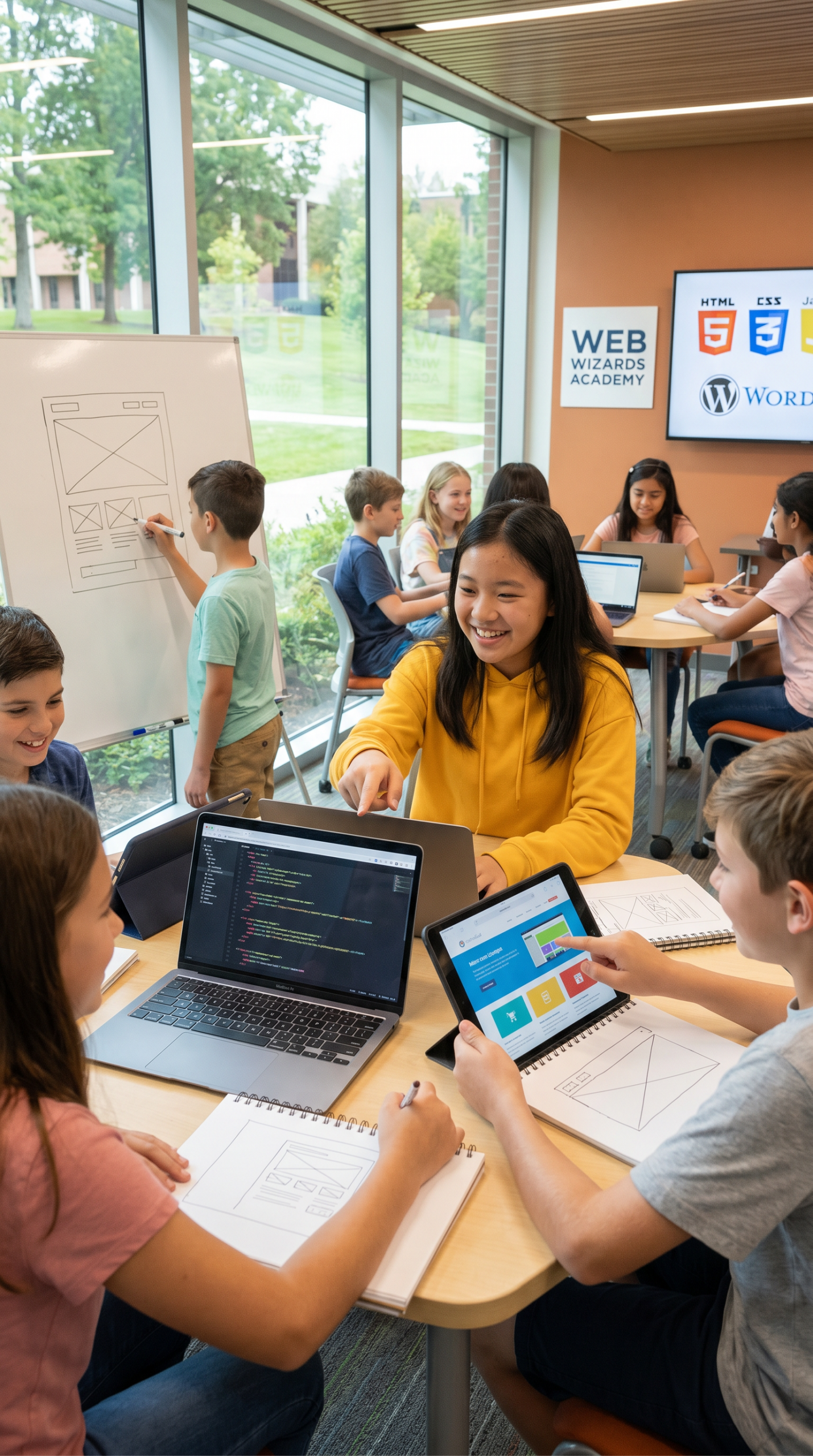
Our Web Development course introduces children to how real websites are built, in three clear, age‑appropriate blocks. First, they explore HTML and learn what a website actually is, building simple pages with headings, text, pictures and links so they can see their ideas appear in the browser straight away. Next, they move on to CSS, choosing colours, fonts, spacing and layout to turn those bare pages into polished, professional‑looking sites, while picking up core design vocabulary and an eye for readability. Finally, they add JavaScript for interactivity, creating buttons, simple animations and small features like quizzes or image galleries, and discovering how HTML, CSS and JavaScript work together on every modern website. Throughout, the emphasis is on creativity, clear thinking and building confidence, not on memorising syntax.
WordPress
Add-on
For learners who want a “real” website fast, our optional WordPress module shows how to choose themes, add pages and posts, and customise layouts, connecting visual editing back to the HTML/CSS skills they’ve already learned.
HTML & How the Web Works
Children discover what a website really is and how browsers display pages. They learn core HTML tags for headings, text, images and links, then build simple single‑page sites about their interests to see instant results in the browser.
- Level 2 - 3
- 5 Sessions
- Years 4 - 6
- 4 Project
CSS & Page Design
Next, we focus on making websites look great. Children use CSS to choose colours, fonts, spacing and layout, styling different parts of a page with classes and IDs to turn their basic HTML pages into polished, professional‑looking sites.
- Level 2 - 3
- 5 Sessions
- Years 4 - 6
- 4 Project
JavaScript & Interactivity
Finally, learners add life to their pages with JavaScript. They create buttons, simple animations and interactive elements like quizzes or image galleries, discovering how HTML, CSS and JavaScript work together to make modern websites respond to clicks and actions.
- Level 2 - 3
- 5 Sessions
- Years 4 - 6
- 4 Projects